

Fortune casino Plinko game
Introduction
When I assess crash-style and instant-win formats for real player value, Fortune casino Plinko is one of the first examples I look at. On the surface, it is almost disarmingly simple: you set a stake, choose a risk level, drop a ball, and watch it bounce through a field of pegs into a payout slot. That simplicity is exactly why many players underestimate it. Plinko looks easy to read, but the actual session experience can vary sharply depending on settings, bankroll discipline, and expectations.
For players in New Zealand who want to understand what Plinko really offers, the key point is this: it is not a slot with reels, paylines, bonus rounds, and layered symbols. It is a probability-driven game built around repeated short outcomes. The appeal comes from speed, transparency, and tension. You can see the path. You can see the multiplier map. You can also feel very quickly how different low, medium, and high risk modes change the rhythm of play.
In this review, I will stay focused on the game itself. I will explain how Fortune casino Plinko works in practice, why it attracts attention, where the real strengths are, and where caution is necessary. My goal is not to oversell it. My goal is to help you decide whether this format suits your playing style before you launch a session.
What Plinko is and why it draws so much attention
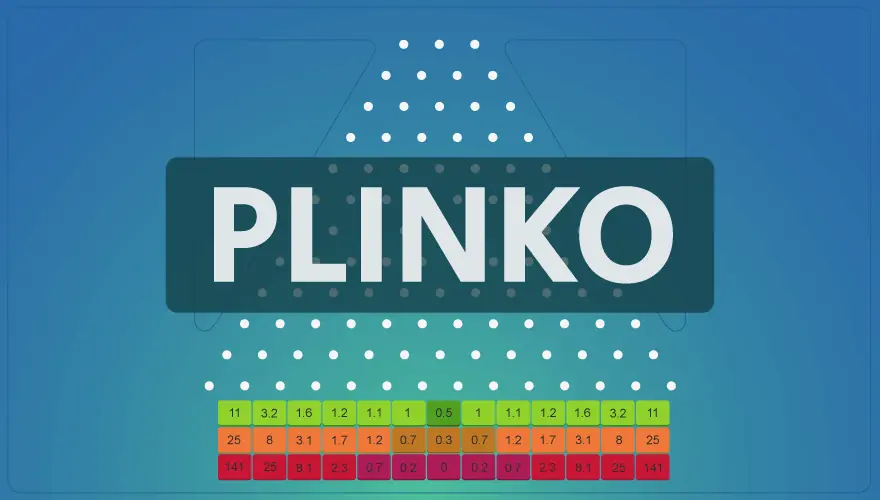
Plinko is a ball-drop gambling game where each round begins with a single action: releasing a ball from the top of a vertical board filled with pins. As the ball hits those pins, it changes direction left or right until it lands in one of several slots at the bottom. Each slot carries a specific multiplier. Lower multipliers tend to sit in the more common landing zones, while the rarest edge outcomes usually carry the highest returns.
The reason Plinko became so noticeable is not just that it is visually clean. It is because it compresses suspense into a very short cycle. A slot spin may involve reels, animations, and additional effects. Plinko gets to the point faster. The entire round is a visible journey from stake to result. That directness makes it easy to understand, but also easy to replay again and again.
Another reason it stands out is that it gives players a stronger feeling of control than many reel-based products, even though the outcome is still random. You often choose the number of rows, the risk profile, and the stake size. Those options do not let you predict where the ball will land, but they do shape the distribution of outcomes. In practical terms, that means two players can launch the same game and have very different session patterns.
One observation I keep coming back to is this: Plinko feels transparent because you watch the ball move, yet that transparency can be misleading. Seeing the path does not make the result more predictable. It simply makes randomness easier to emotionally follow. That is part of the attraction.
How the Plinko system works in practice
At the core of Fortune casino Plinko is a simple chain of decisions and outcomes. You choose your bet amount, select a risk level, and in some versions adjust the number of rows. Then the ball is dropped. Every collision with a peg creates a left-or-right deflection. After enough deflections, the ball reaches one of the bottom multipliers.
What matters to the player is not the visual bounce itself, but the distribution behind it. The center slots are usually easier to hit because there are more possible paths leading there. The outer slots, especially the high multipliers, are harder to reach because they require a narrower sequence of directional outcomes. That is why the biggest returns can look close on the screen but remain statistically uncommon.
Risk mode changes the multiplier map. In a low-risk setting, the board usually offers more modest differences between common and rare outcomes. In a high-risk setting, the center can become less rewarding while the edges offer much larger multipliers. This shifts the session from steadier small returns to longer dry stretches punctuated by occasional spikes.
In practical terms, the same stake behaves differently depending on the setup. A player using low risk may see frequent partial returns that slow bankroll decline. A player using high risk may experience a sharper cycle: many low results, then a single strong hit that changes the session graph. Neither mode removes the house edge. They simply change how that edge is felt over time.
| Setting | What changes | What it means in a session |
|---|---|---|
| Bet size | The value of each drop | Direct impact on bankroll speed and emotional pressure |
| Risk level | Multiplier distribution | Changes whether results feel steadier or more swing-heavy |
| Rows | Path length and slot structure | Can alter the spread of likely and unlikely outcomes |
| Auto-play | Round repetition speed | Can accelerate losses or gains before the player reacts |
One detail that many new players miss is that row count is not just a visual preference. More rows generally mean more bounce events before the final landing, which can widen the structure of possible end positions. That may increase the feeling that “anything can happen,” but it does not mean high multipliers become likely. It often means the board becomes more expressive while still favoring common zones.
Why the game feels engaging and how the pace affects decision-making
Plinko’s engagement comes from tempo as much as from outcome. Each round is short. There is almost no downtime. You do not wait for symbols to line up, bonus wheels to trigger, or free spins to build. The result arrives quickly, and that creates a loop that can feel smooth and efficient.
That speed is one of the format’s biggest strengths, but also one of its pressure points. Fast games reduce the gap between intention and action. If you win, it is easy to chase another high multiplier. If you lose several rounds in a row, it is easy to increase the stake because the next drop is only seconds away. The interface looks calm, yet the session can become intense very quickly.
I often describe Plinko as a game with a quiet screen and a noisy bankroll graph. Visually, very little is happening compared with modern slots. Financially, a lot can happen in a short period. That contrast is important. Players who judge intensity only by screen effects may underestimate how aggressive the pacing can be.
There is also a psychological hook in the visible near-miss effect. When a ball bounces toward an outer lane and then falls back to the middle, it creates a stronger emotional reaction than a hidden random number ever could. Even though each round is independent, the eye reads pattern into motion. That can make the experience feel more personal than it really is.
- Short rounds encourage repetition. This is convenient for testing settings, but it can also lead to impulsive volume.
- Visible movement increases emotional involvement. Watching the path often feels more dramatic than waiting for a reel stop.
- Risk settings shape the mood of the session. Low risk can feel controlled; high risk can feel dry, then explosive.
Understanding probability, variance, and expected session outcomes
If you are considering Fortune casino Plinko, the most important thing to understand is that the game is built on probability distribution, not streak logic. The ball does not “owe” you an edge hit after a run of central landings. A cluster of low multipliers does not make a large multiplier due. Each drop is a fresh event generated within the game’s random framework.
Because of that, session planning matters more than intuition. Players often enter Plinko with one of two mistaken assumptions. The first is that the visible path can be read like a trend. The second is that a higher number of rounds naturally improves the chance of a dramatic hit in a meaningful short-term way. In reality, more rounds mainly increase exposure. They do not create an entitlement to a standout result.
Variance is where the format becomes most misunderstood. In low-risk mode, the board may produce more frequent small returns, which can create the impression of stability. But stability is relative. A long enough session can still wear down a bankroll if the multipliers do not cover the stake often enough. In high-risk mode, the opposite happens: the session may look unproductive for a while, then change abruptly on one rare landing.
Here is the practical reading of those dynamics:
| Mode | Typical feel | Main player misconception | Practical reality |
|---|---|---|---|
| Low risk | More frequent minor returns | “This mode is safe” | It is gentler, not safe; losses can still accumulate steadily |
| Medium risk | Balanced but still uneven | “This gives the best of both worlds” | It can feel more playable, but it still depends on discipline and session length |
| High risk | Long quiet stretches with occasional spikes | “One big hit will fix the session” | Large multipliers are rare, and bankroll swings can become severe |
A memorable truth about Plinko is that it often looks friendlier than it behaves. The board resembles a casual arcade concept, but the mathematics underneath can be unforgiving, especially when high-risk settings meet rapid auto-play.
How risky Plinko really is and who is likely to enjoy it
Plinko can range from moderately manageable to highly aggressive depending on configuration. That is why broad statements about whether it is “safe” or “wild” miss the point. The better question is: how much volatility are you choosing, and how fast are you cycling through rounds?
For a player who prefers short sessions, clear outcomes, and a format that does not require learning paylines or bonus trees, Plinko can be a good fit. It is also suitable for people who like to test different stake-and-risk combinations and observe how session texture changes. There is a clean experimental quality to it. You make a small adjustment, and the result pattern often feels noticeably different.
On the other hand, players who want narrative progression, layered bonus sequences, or strategic depth may find it too narrow. There is no evolving story inside the session. No expanding wilds. No feature hunt in the slot sense. The game is more about repeated probability events than about discovery.
It may also frustrate players who react strongly to near misses. Because the ball visibly approaches premium zones, the emotional pull can be stronger than in games where the random outcome is less theatrical. If you know that visual suspense pushes you into chasing behavior, Plinko deserves extra caution.
- Plinko may suit you if: you prefer fast rounds, direct results, and adjustable session intensity.
- It may not suit you if: you need deeper feature variety, slower pacing, or a stronger sense of progression.
What separates Plinko from slots and other casino game formats
The clearest difference between Plinko and classic slots is structural. Slots are symbol-driven. Their entertainment value often comes from combinations, bonus triggers, free spins, and special icons. Plinko is path-driven. The central event is a falling object interacting with a probability board. That makes the experience feel more transparent, even though the randomness is no less real.
Compared with roulette, Plinko offers more visual journey between stake and result. Compared with blackjack, it offers no decision layer once the round starts. Compared with detailed Fortune Casino crash games information for active casino players, it removes the timing decision and replaces it with a pre-set multiplier landscape. In other words, it sits in an interesting middle ground: more active than watching a wheel, less strategic than card play, and more visually tactile than many instant-win formats.
This is why some players migrate to Plinko after getting tired of long slot sessions. They want something faster and easier to read. Others move away from it for the same reason. Once the novelty of the ball path fades, they miss the richer feature architecture of reel-based products.
From a practical standpoint, the biggest difference is how quickly you can evaluate your own fit with the game. With slots, it may take time to understand bonus frequency and feature behavior. With Plinko, the appeal or lack of it becomes obvious early. If the core loop of “set, drop, land” does not engage you, no hidden layer is going to change the experience later.
Practical strengths and weaker points of Fortune casino Plinko
Every gambling format has trade-offs, and Fortune casino Plinko is no exception. Its best qualities are real, but so are its limitations. The value of the game depends on whether those trade-offs match your preferences.
Main strengths. First, the format is easy to understand. A new player can grasp the core logic within minutes. Second, the game offers visible cause-and-effect between settings and session feel. Changing risk mode genuinely changes the emotional shape of play. Third, the pace is efficient. If you want a short session with clear outcomes, Plinko delivers that better than many feature-heavy alternatives.
Main limitations. The simplicity can become repetitive. There is not much thematic depth, and long sessions may start to feel mechanically similar. Another issue is that visual transparency can create false confidence. Because you can see the ball move, the randomness may feel more readable than it is. Finally, high-speed repetition can make bankroll control harder than expected, especially for players who use auto-play without fixed limits.
I would also call out one subtle weakness: Plinko can distort a player’s memory of the session. Rare premium hits are highly memorable, while long sequences of weak landings blur together. That memory imbalance can make the overall result feel better than it actually was.
- Strong point: immediate clarity of format and low learning curve
- Strong point: adjustable risk profile changes the session in meaningful ways
- Strong point: fast, compact rounds suit players who dislike slow build-up
- Weak point: limited variety compared with slots and table games
- Weak point: pace can encourage overexposure
- Weak point: visible near misses may increase emotional chasing
What to check before launching a real-money Plinko session
Before playing for money, I recommend treating Plinko less like a casual novelty and more like a high-speed probability tool. A few small checks can make a major difference to how the session unfolds.
Start with the risk setting. Do not choose high risk just because the top multiplier looks exciting. Ask whether your bankroll can absorb a long sequence of modest results. Then look at stake size in relation to session length. In a fast format, even a seemingly small bet can add up quickly if you run many rounds in a short time.
If a demo mode is available, use it to study rhythm rather than to “prove” a strategy. Demo play is useful because it shows how often outcomes cluster in the middle and how different risk levels change the pattern. It is not useful as a predictor of what your real-money session will do next.
I also suggest setting one practical rule before you begin: decide whether your goal is to test the format, chase a high multiplier, or simply play a short controlled session. Those are different intentions, and they should lead to different choices. The player who wants to explore the board should not behave like the player who is deliberately accepting high swings.
Here are the key checks I consider essential:
- Choose risk level based on bankroll tolerance, not on headline multipliers.
- Set a round limit or loss limit before using auto-play.
- Use demo mode to understand pacing and distribution, not to build false certainty.
- Expect uneven results even in lower-risk settings.
- Do not interpret visible ball movement as a sign that outcomes are becoming predictable.
Final verdict on Fortune casino Plinko
Fortune casino Plinko offers a very specific kind of gambling experience. It is fast, visually readable, and mechanically straightforward, but it can produce very different session moods depending on how you configure it. That is the game’s real identity. It is not just a simple ball-drop screen. It is a flexible probability format where risk settings, pace, and player discipline shape the entire experience. The full picture of payment methods lives in Fortune Casino roulette for New Zealand players, including the less common ones.
Its strongest qualities are clarity and immediacy. You know what is happening, you get results quickly, and you can adjust the intensity without needing to learn a complex ruleset. For players who want direct action and short rounds, that is a genuine advantage. For players who prefer layered bonus design, slower tempo, or a stronger sense of progression, the format may feel too thin after the first burst of interest.
The main caution is equally clear. Plinko can look harmless because the interface is clean and the rules are easy to grasp. In reality, the combination of speed, visible near misses, and adjustable variance can make it more demanding on bankroll control than many newcomers expect. High-risk mode especially should be approached with realistic expectations, not with the idea that a big multiplier is waiting just because several rounds have gone by. To understand the wagering rules behind each offer, open Aviator crash game guide next.
If I had to sum it up plainly, I would say this: Plinko is worth trying if you want a transparent, fast-moving alternative to classic slots and you are comfortable with repeated short-form randomness. It is less suitable if you need strategic depth or if fast cycles tend to pull you into reactive betting. Used with clear limits and the right expectations, it can be engaging. Used carelessly, it can become expensive much faster than its simple design suggests.
FAQ
What does Plinko on Fortune mean when the ball drops across the board?
Plinko is a fast ball-drop game where each bounce determines which multiplier slot the ball lands in. Every round is resolved immediately after the ball reaches the bottom. Multipliers can differ by landing position, so the board layout directly affects the result.
How is the risk level handled in Plinko, and what should be watched during play?
Risk in Plinko is reflected through the multiplier spread across the bottom slots. Bigger multipliers are typically tied to fewer landing areas, so results can swing quickly. Keeping an eye on the current stake amount before each ball drop helps manage session volatility.